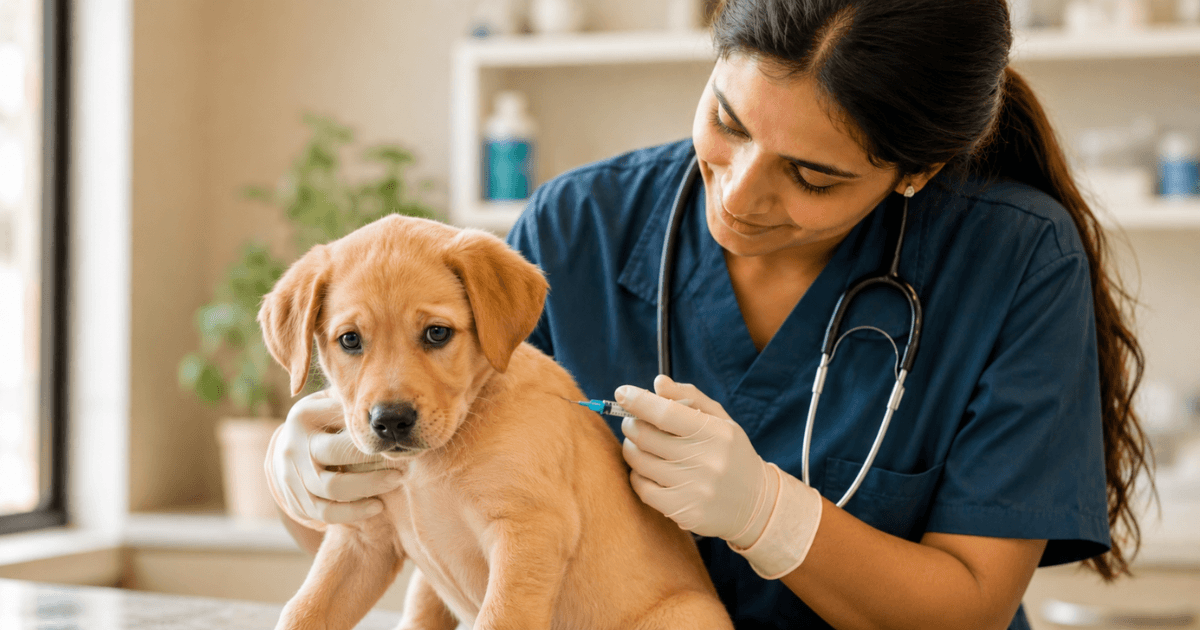
Vaccines & Health
Puppy Vaccine Schedule: Complete Month-by-Month Timeline with Costs (2026)
Complete puppy vaccine schedule from 6 weeks to 1 year. Vet-approved timeline, costs, and what each vaccine protects against.
Bringing home a new puppy comes with a flood of advice - and vaccines are usually the part that feels most confusing. Unlike adult dogs, puppies need a series of shots, spaced out over weeks, because their immune systems are still developing and early doses can be blocked by antibodies from their mother’s milk.
Here’s the timeline vets actually follow, month by month.
6 to 8 weeks: the first round
This is usually when a puppy gets their first combination shot - typically covering distemper, parvovirus, and a few other core diseases. If you got your puppy from a breeder or shelter, this first round may already be done; always ask for the paperwork.
10 to 12 weeks: the second round
A repeat of the combination vaccine, plus your vet may introduce non-core vaccines here depending on your location and lifestyle - things like leptospirosis or Bordetella (kennel cough), especially if daycare or boarding is in your future.
14 to 16 weeks: the final puppy round and rabies
This round finishes the core series and is typically when the rabies vaccine is given, which is legally required in most places. Skipping or delaying this one isn’t just a health risk - it can also cause problems with licensing, boarding, or even flying with your dog later.
12 months: the first booster
About a year after the initial series, most puppies get a booster round to reinforce the vaccines given as a puppy. After that, boosters typically shift to every 1-3 years depending on the vaccine and your vet’s protocol.
What if you fall behind schedule?
Life happens - a missed appointment doesn’t mean starting over, but gaps that run too long can mean a vaccine needs to be repeated rather than boosted. If you’re not sure where things stand, your vet can check titers or simply restart the current stage of the series; it’s rarely as bad as people fear.
This is exactly why PawCare AI’s vaccine tracking exists - once each shot is logged, the app tracks what’s due next and when, so you’re not relying on memory or a fading paper card tucked in a drawer somewhere.
Frequently asked questions
Can my puppy go outside before finishing the vaccine series?+
Do all puppies need the same vaccines?+
What happens if a booster is a few weeks late?+
The bottom line
The puppy vaccine schedule looks complicated on paper, but it really comes down to three rounds in the first four months, then a yearly rhythm after that. Keep the actual dates logged somewhere reliable, ask your vet about anything region-specific, and the rest takes care of itself.
Keep reading

Jul 24, 2026
What Happens If Your Dog Misses a Vaccine Booster?
Missed your dog's vaccine booster? Learn what may happen next, what to do now, and why the right next step depends on the vaccine and your dog's history.
Jul 22, 2026
Kitten Vaccine Schedule: Complete Timeline for New Cat Owners (2026)
Complete kitten vaccination guide from 6 weeks to adulthood. Indoor vs outdoor, booster timing, and cost breakdown.
Jul 23, 2026